 Tally Wild
Thermal drone deer recovery
When the blood trail runs out, a thermal drone can still see your deer. A body stays warm for hours, and from above it stands out against the cold woods. Pilots often find a downed deer in minutes, without walking it up and pushing it farther.
Free. See the three closest pilots and message one. Drone pilot? Get on the map.
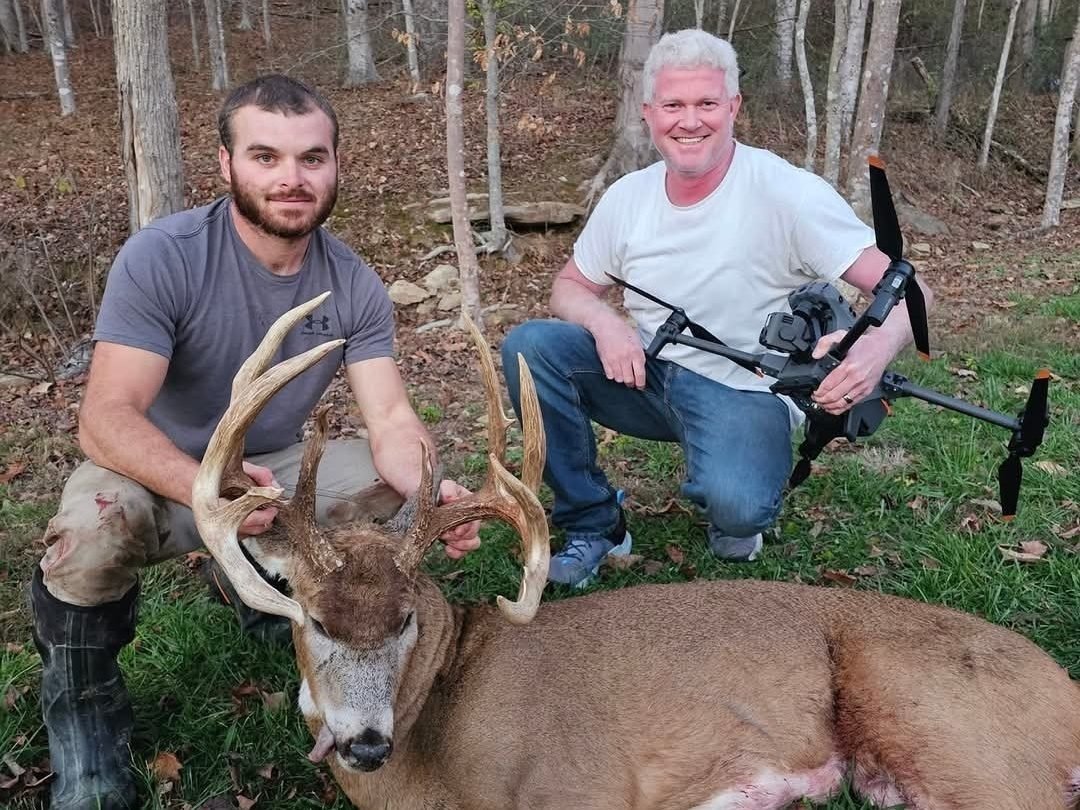
Why hunters call a drone
Every hunter knows the feeling of a lost trail after dark. A thermal drone searches from the air, so it covers ground faster than a search party and doesn't leave scent or noise behind it.
Sees body heat
A deer's heat shows clearly on a thermal camera at night or on a cold morning, even when there's no blood left to follow.
Covers ground fast
Hundreds of acres can be checked in the time it takes to grid search a few. Thickets, creek bottoms and fields are searched from above.
Doesn't push the deer
If the deer is still alive, the drone stays high and quiet so you don't jump it. The pilot can tell you whether to wait.
Helps you stay ethical
Recovering the animal you shot means less waste and more respect for the game. It also helps you know if it's time to call off the search.
Guides you right to it
The pilot watches the screen and talks you in, step by step, to where the deer lies.
Useful for other game
The same flight works for other big game where your state allows drone recovery.
Fast recoveries when the deer is in the area flown
Drone recovery is newer, so most numbers come from the pilots doing it. They agree on one thing: the sooner and closer to the hit site you fly, the better your odds.
recovery rate one drone recovery network reports when the deer is within the area the drone searches.
Drone Deer Recovery, quoted by Outdoor Life, 2024is how long pilots often need to spot a dead deer once they're flying over it.
Outdoor Life, 2024after the shot, deer can still be found on thermal, according to the same report. Sooner is always better.
Outdoor Life, 2024What happens when you call a pilot
Mark the spot
Note where you shot from, where the deer was hit and the last blood. Don't keep tracking if you might push it.
Find a pilot
Search your zip code on the map. Message a pilot with the location, time of the shot and the hit.
The drone searches
The pilot launches near the hit site and searches outward on thermal, from a safe height.
Walk in and tag it
The pilot guides you to the deer. You tag and check it in under your state's rules.
Tips that help a pilot find your deer
- Call as soon as the trail goes cold. Heat fades over time and warm days make it harder.
- Write down the time of the shot and what the hit looked like.
- Mark your stand, the hit site and the last blood with GPS pins or flagging tape.
- Get permission from neighboring landowners if the deer may have crossed the line.
- Keep dogs and people out of the area until the drone is up, so heat signatures aren't confused.
Deer recovery pilots near you
Thermal drone pilots on the map offer deer recovery in their area, often the same night. Search for pilots in Ohio, Kentucky, West Virginia, Indiana, Wisconsin and Virginia and across the US. Rules vary by state, so your pilot will know what's allowed where you hunt.
Deer recovery questions
How does a drone find a dead deer?
A thermal camera sees heat. A recently killed deer stays warmer than the ground around it for hours, so it stands out on the screen even in thick cover or after dark.
How long after the shot can a drone still find my deer?
The sooner the better. Pilots report finding deer up to about two days later in cool weather, but heat fades with time and warm temperatures make it harder.
Can a drone see through trees?
Thermal cameras can see through gaps in bare timber and some canopy. Dense evergreens make it harder, and the pilot may search from several angles.
Is drone deer recovery legal in my state?
It depends on the state and changes often. Some states, like West Virginia since 2025, allow it with rules; others restrict it. Check your state wildlife agency's current regulations and ask your pilot.
Will the drone push a wounded deer?
Pilots fly high and quiet to avoid that. If the deer is still alive, the pilot will tell you so you can decide when to move in, within your state's rules.
How much does drone deer recovery cost?
Each pilot sets their own price, often a flat fee plus travel. Message a pilot from the map to ask.
Sources: Outdoor Life: drones and deer recovery, 2024 · West Virginia HB 2043 (2025) summary · Kentucky drone rules, 2025
Do deer recovery? Get the calls
Hunters search the Find a Pilot map by zip code when a trail goes cold. List yourself for $100 a year, or free with a Tally Wild subscription, and get their messages by email.